Social Inclusion

Vulnerable and marginalized groups

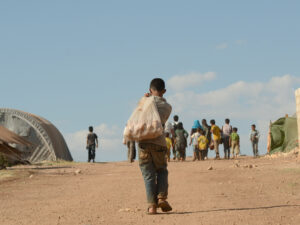
To work towards more inclusive infrastructure development as defined above, an understanding of which individuals and groups are at risk of being excluded from the benefits of infrastructure development or adversely affected by it is needed. The list on the left offers a non-exhaustive overview of these individuals and groups and lists some specific needs which should be taken into account in inclusive infrastructure development.

Individuals may be at the intersection of two or more of these vulnerable and marginalized groups. The term used to describe this phenomenon is “intersectionality”. For example, a person might be female, from a low-income group and living in a vulnerable environment. Importantly, the needs of, and the barriers faced by, for instance, a woman from a low-income household may be very different compared to those of a woman from a high-income household. Understanding the concept of intersectionality is critical when identifying and consulting with representatives of marginalized groups and when designing appropriate solutions for more inclusive infrastructure development.

  • Low-income groups

    Affordability, political voice, social engagement

  • Women and girls

    Safety, harassment and violence, access to employment, political voice

  • Youth

    Training, skill development, employment

  • Children

    Safety, access to education

  • Elderly

    Mobility, independence

  • People living with a disability

    Mobility, physical and attitudinal barriers, employment

  • The unemployed

    Training, skill development, employment

  • Minority groups

    Consultation, political and attitudinal barriers, employment

  • People living in vulnerable environments

    Vulnerability to shocks, design for environmental and climate variability

  • People living in informal settlements

    Land title and proof of address issues, geographic isolation, affordability issues

Stakeholder engagement

Stakeholder identification and engagement is an essential step towards ensuring that the needs of societal groups at risk of being excluded from the benefits of infrastructure development or adversely affected by it are taken into account.

Traditional stakeholder mapping and engagement mostly identifies and engages with the stakeholders that have the greatest influence on the respective infrastructure project or those who are most impacted by it. This approach, however, risks overlooking the very individuals or groups that are at the risk of being excluded or adversely affected by infrastructure development. Therefore, stakeholder consultations in the context of inclusive infrastructure development should focus on involving all disadvantaged target groups that are often overlooked during traditional stakeholder consultations. By integrating the viewpoints of these individuals and societal groups, inclusive stakeholder consultations foster a better understanding of their specific needs, thereby reducing inequalities regarding the access to infrastructure and the associated benefits.

What can be done?

Apart from consulting with stakeholders in an inclusive way as described above, several other measures can be taken to prevent infrastructure development from having detrimental effects on vulnerable and marginalized groups and instead foster positive societal benefits, some of which are described below. While these measures are relevant for many parts of the infrastructure lifecycle they are best already taken during the initial planning phases of infrastructure projects when there are still possibilities to incorporate the needs of vulnerable and marginalized groups.

Infrastructure development should avoid displacement, loss of housing, land, assets and livelihoods. If unavoidable, affected communities and persons should be adequately compensated in an equitable, transparent and heritage preserving manner, offered improved or restored standards of living and assisted and directly engaged during the resettlement process.

For example, in the course of a canal upgrading project in Ho Chi Minh City, Vietnam, a comprehensive and participatory relocation program was put in place for the affected low-income households along the canal. The program included upgrading part of the houses along the canal and offering the families who had to be relocated a variety of options that reflected their respective needs, culture and financial situation. These relocation options were constructed in frequent consultations with the affected families and provided them with access to electricity, water and social infrastructure.

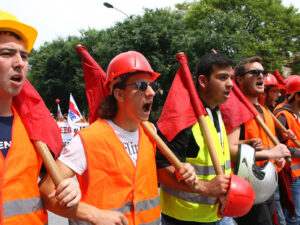
Infrastructure development should respect the health, safety, rights and needs of workers who contribute to building the infrastructure and should give all workers equal opportunity to access jobs created by infrastructure developments, as well as to develop skills, be compensated and treated fairly, with dignity and without discrimination.

For example, after the successful unionization of informal, self-employed waste pickers in Pune, India, the union collaborated with academic institutions and other agencies to document the inadequate working conditions of waste pickers and their essential contributions to the city’s solid waste management. This research led, among other things, to the introduction of a medical insurance scheme for the waste pickers, paid for by the municipality.

Open access to infrastructure services should be secured in a non-discriminatory manner for everyone in society so that the benefits of infrastructure are inclusive and accessible to everyone, in particular
to the vulnerable and underserved groups, thereby promoting social equality and inclusion.

For example, the implementation of an urban aerial cable car public transport system in Medellin, Columbia, significantly improved the access of the urban poor, who live in hilly and inaccessible suburbs outside of the city, to resources and opportunities in the city, including access to the city’s metro system.

Interested in learning more?

Inclusive Infrastructure and Social Equity

By: Global Infrastructure Hub and Atkins Acuity

This report aims at providing practical guidance for government officials regarding the implementation of inclusiveness in infrastructure development across six “action areas”, illustrated by various case studies.

Inclusiveness in Sustainable Infrastructure and the Nexus with the Environment

By: The Observatory for Sustainable Infrastructure

This paper focuses on the meaning of inclusiveness in the context of infrastructure, on the relation between the notion of inclusiveness and environmental sustainability and on how inclusivity can be integrated in infrastructure.

Are we Building Competitive and Liveable Cities? Guidelines for Developing Eco-Efficient and Socially Inclusive Infrastructure

By: UNESCAP

This report promotes an integrated approach to the planning, designing and management of urban infrastructure, taking into account principles and criteria of eco-efficiency and social inclusiveness. It provides a framework of approaches and tools and uses case studies from cities around the world that have different approaches to inclusiveness.

Relevant sustainability tools